
Quote of the day by Neil deGrasse Tyson: “As an educator, it’s my duty to empower you to think. So that you can…” – a powerful message on education |

Quote of the day by Neil deGrasse Tyson (Image: Wikipedia) Neil deGrasse Tyson‘s words present education as something considerably bigger than simply memorising facts. “As an educator, it’s my duty to empower you to think,” he said. “So that you can go forth and think accurate thoughts about how the world is put together.” He…
Read More

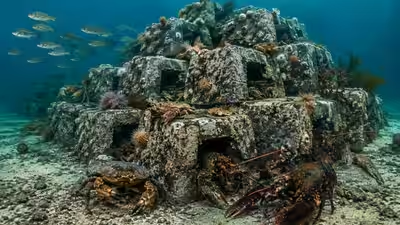
In 1989, UK researchers turned 50 tonnes of coal-fired power station waste into an underwater reef; lobsters and crabs arrived within 3 weeks

Representative Image (AI-generated) What happens when waste from a coal-fired power station is placed beneath the sea? In 1989, researchers in the UK built an experimental artificial reef from 50 tons of stabilised coal-fired power station waste, and marine life began moving in almost immediately. The unusual experiment took place in Poole Bay, off the…

Read More

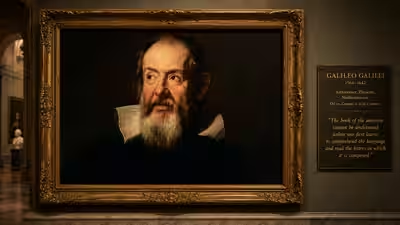
Quote of the day by Galileo Galilei: “The book of the universe cannot be understood unless one first learns to…” |

The universe has fascinated humanity for centuries, but understanding it requires more than simply looking at the stars and planets. Galileo Galilei, one of history’s most influential astronomers and scientists, offered a powerful way of thinking about nature, arguing that the universe could be understood only by learning the language in which it was written….

Read More

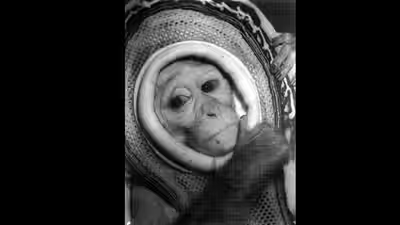
In 1960, Nasa launched rhesus monkey Miss Sam on a Mercury escape test, reaching 1,800 mph before she landed safely in the Atlantic |

In January 1960, Nasa launched the rhesus monkey Miss Sam aboard a Little Joe rocket from Wallops Island, Virginia, to test the launch escape system built for Project Mercury. The flight was designed to confirm that the escape tower could pull the capsule clear of its booster during an abort, a safeguard critical to any…

Read More

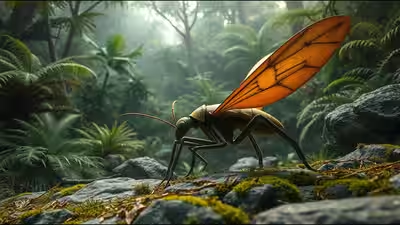
A 324-million-year-old fossil reveals an early insect with paddle-like limbs that lived between water and land before insects conquered Earth |

Representative Image of Chosha praecursor, an early insect with paddle-like abdominal appendages in a prehistoric landscape (AI-generated image) Today, insects occupy nearly every terrestrial environment on Earth and account for more described species than any other animal group, yet the earliest stages of their evolutionary history remain poorly documented. A newly described species from western…

Read More

Meet Prakhar Purohit, the North Carolina student who found a way to make tiny batteries from dirty water |

Prakhar Purohit. Image Credit: Young Scientists Lab Prakhar Purohit, a student from North Carolina, has earned recognition for a science project with a unique yet simple-sounding idea of ‘making tiny batteries from dirty water.’ His project, titled ‘Tiny Batteries from Dirty Water,’ was selected as the 2026 North Carolina State Merit Winner in the 3M…

Read More

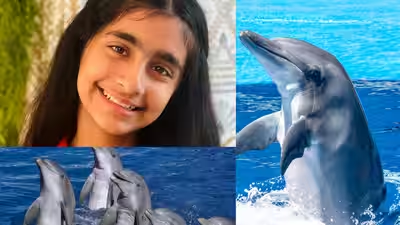
Meet Ishanvi Sakharpe, the Virginia student who built Dolphin Guard to help protect dolphins from dangerous human activity |

Image(s): Young Science Lab/Canva Ishanvi Sakharpe is a Virginia student using science and technology to address a problem affecting one of the ocean’s most recognisable animals. Her project, Dolphin Guard, was created with the aim of helping protect dolphins from dangerous human activity in marine environments. The young innovator’s work has now earned recognition through…

Read More

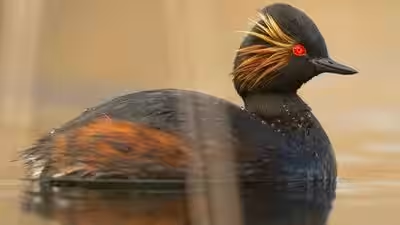
An English dumping ground for canal dredgings was restored as wetland; black-necked grebes rose from 4 breeding pairs to 35 in two years, and it now holds 64% of the UK population

Woolston Eyes in Cheshire recorded 35 breeding pairs of black-necked grebes in 2025 (Photos: RSPB) A former dumping ground for dredged material from the Manchester Ship Canal has been transformed into a wetland. The wetlland has now become the most important breeding site in the UK for the rare black-necked grebe.According to the Royal Society…

Read More

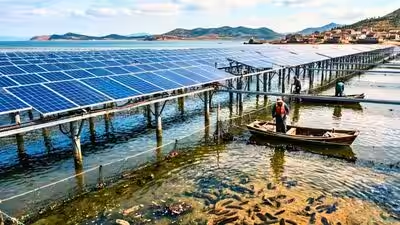
China covered 40% of sea cucumber ponds with solar panels; younger animals spent 12 fewer days in summer inactivity |

Solar panels are usually associated with electricity, but a study in China has found that they can also change the summer conditions inside sea cucumber ponds. Researchers examined ponds fitted with photovoltaic panels and found that the shade reduced the amount of light reaching the water and lowered its temperature. The cooler conditions were linked…

Read More

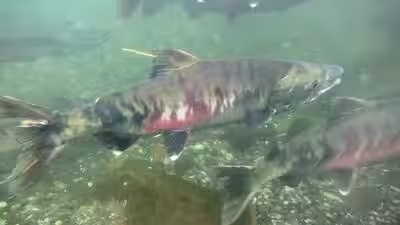
In the early 1990s, fewer than 1,000 threatened chum salmon returned to this Washington watershed; recent returns average 32,600 a year as a $9.7 million river restoration nears completion

chum salmon Representative image In the early 1990s, fewer than 1,000 threatened summer-run chum salmon made it back to the Big Quilcene River on Washington’s Olympic Peninsula each year. Decades of logging, road building and habitat degradation had left the river choked with sediment, its gravel spawning beds buried and its side channels disconnected. Today,…

Read More