

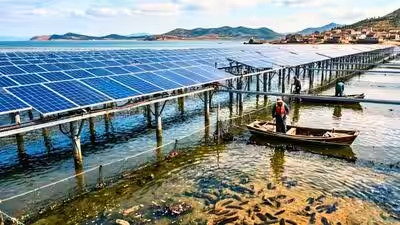
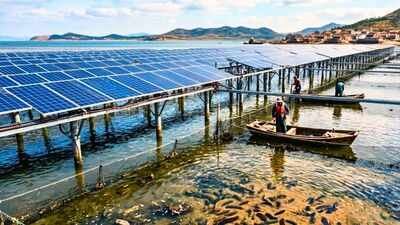
Solar panels are usually associated with electricity, but a study in China has found that they can also change the summer conditions inside sea cucumber ponds. Researchers examined ponds fitted with photovoltaic panels and found that the shade reduced the amount of light reaching the water and lowered its temperature. The cooler conditions were linked to a shorter period of aestivation, when sea cucumbers become less active and stop feeding during the hot summer months. The effect was especially noticeable in sub-adult animals. Research published in ScienceDirect titled ‘Integrating photovoltaic with sea cucumber aquaculture: Environmental impacts and holothurian digestion and aestivation’ suggests that combining solar power with aquaculture could offer benefits beyond renewable energy generation. By providing shade and lowering water temperatures during the hotter months, the panels may create more favourable conditions for farmed sea cucumbers. However, the researchers also noted changes in the pond environment that need to be monitored over time.
What happened when researchers covered sea cucumber ponds with solar panels
Researchers studied sea cucumber ponds in the Yellow River Delta, where photovoltaic arrays had been integrated with farming. The solar installation had a capacity of 200 MWp and covered 40% of the pond area. Three photovoltaic ponds were compared with three ponds without panels, with each pond covering about 6.7 hectares and an average depth of 1.5 metres. Monitoring took place monthly from March 2023 to February 2024, allowing researchers to track environmental conditions across seasons. The panels created substantial shade over the water. In shaded areas, light intensity fell by an average of 80.5%, while water temperature was 1.20°C lower than in non-photovoltaic ponds. Researchers examined these changes alongside sea cucumber physiology.
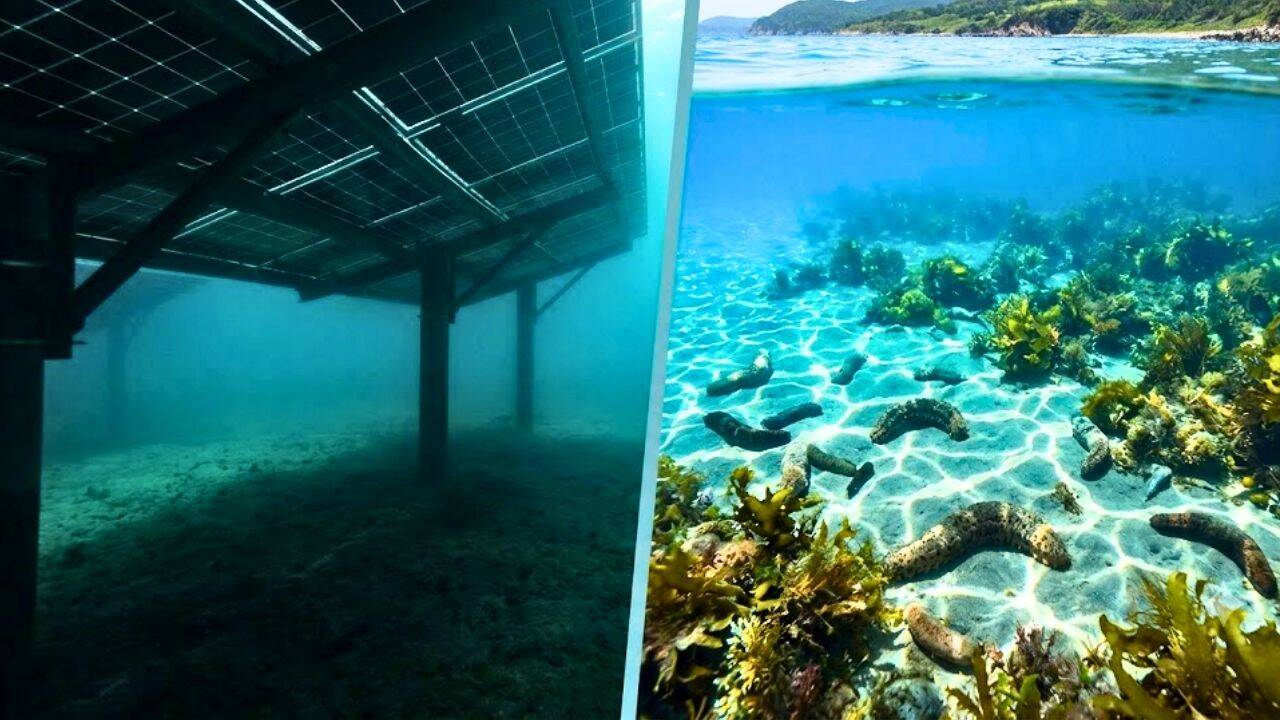
PC: AI Generated
Why did younger sea cucumbers spend less time in summer aestivation
The cooling effect mattered because Apostichopus japonicus is sensitive to high temperatures. During summer, sea cucumbers can enter aestivation, a period when activity and feeding decline as animals cope with heat. To estimate its duration, researchers used temperature thresholds and screened pond temperatures. For adults, temperatures above 25°C were used, while 29°C was used for sub-adults. The calculations produced an aestivation period of 114 days for adults in non-photovoltaic ponds and 113 days in photovoltaic ponds. According to the study, for sub-adults, the predicted aestivation period fell from 62 days without panels (non-photovoltaic ponds) to 50 days with panels (photovoltaic ponds). This resulted in a 12-day reduction in the predicted aestivation period for younger sea cucumbers. The researchers suggested that spending less time in aestivation could potentially support their growth.
What other changes did the solar panels cause inside the ponds
The researchers also examined whether the solar panels affected other parts of the pond environment. They found no significant change in the types of plankton present, and the panels did not affect the digestive enzyme activity of the sea cucumbers. However, some changes were seen in the shaded ponds. Zooplankton numbers decreased, while Pyrrophyta, a type of phytoplankton, became more common in spring and made up an average of 57.9% of the phytoplankton in the photovoltaic ponds. The amount of organic matter in the sediment also decreased under the panels. These findings suggest that solar panels can do more than simply cool the water, as they can also affect the pond’s wider environment. The researchers said these changes should be monitored to understand their possible effects on food availability and the pond ecosystem.
Could solar panels make sea cucumber farming more suitable for hotter summers
The study suggests that aquavoltaics could give farmers benefits that include renewable electricity above the ponds and a cooler, darker environment below. The researchers noted that sea cucumbers prefer low light and seek shelter, which means photovoltaic panels can provide conditions similar to shade while reducing heat exposure.The 12-day difference was therefore a predicted reduction in aestivation based on temperature levels, rather than a direct observation of sea cucumbers ending aestivation 12 days earlier.