
In 1975, Kodak began operating a uranium-based research device beneath its Rochester laboratory; 31 years later it shut down, and a new account explains why it was never a self-sustaining nuclear reactor

Kodak’s equipment contained about 3.5 pounds of highly enriched uranium (Representational AP photo) For most people, Kodak is a name associated with cameras and photographic film. But for 31 years, the American company had something far less familiar inside its research facility in Rochester, New York: a nuclear device containing highly enriched uranium.The machine began…
Read More

Radio tags reveal how giant green anacondas hide underwater in the Amazon; researchers spotted them at just 17.7% of tracked locations |

Representative Image of a green anaconda concealed among dense vegetation and riverbanks in the western Amazon rainforest (AI-generated image) In the western Amazon, finding a green anaconda can depend on more than knowing which river it inhabits. Dense vegetation, submerged debris and concealed riverbanks can make the giant reptile difficult to observe, even when researchers…

Read More

Scientists discover a giant fungus in China that grows up to 50 cm tall, weighs 2.2 kg, and traces its origins to 65 million years ago |

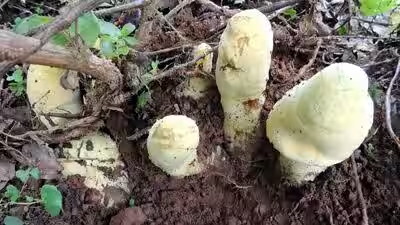
PC: Frontiers in Fungal Biology A fungus discovered in the forests of southwestern China has drawn attention for its extraordinary size and ancient evolutionary history. The newly identified fungus, Dianjunus rex, produces massive, fleshy structures that can reach 50 centimetres in total height, including a buried stalk, with the heaviest specimen weighing 2.2 kilograms.Its unusual…

Read More

South Wales rewetted damaged peatlands; monitoring recorded expanding water-vole signs alongside recovering bog plants and wildlife |

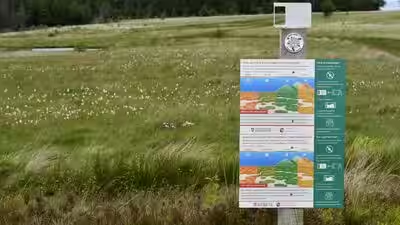
PC: Lost Peatlands of South Wales project Peatland restoration across South Wales has shown positive results, with rising water tables at some sites, changes in vegetation and increased wildlife activity recorded at restored sites. The findings come from a monitoring programme conducted between 2021 and 2025 to understand how these landscapes respond to restoration and…

Read More

Mars forms a 1,800-kilometre cloud nearly twice the length of the UK near a giant volcano every morning, and scientists think it may form ice without dust |

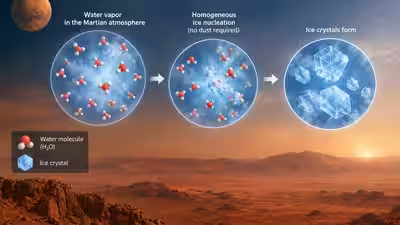
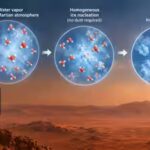
Representative Image of homogeneous ice nucleation on Mars, highlighting water vapor transforming into ice without dust (AI-generated image) Every morning during spring and summer in Mars’s southern hemisphere, a long white cloud appears downwind of the giant volcano Arsia Mons. The Arsia Mons Elongated Cloud, or AMEC, can stretch up to 1,800 kilometres before fading,…

Read More

Costa Rica releases 13 white-lipped peccaries after an 18-year absence; the animals disperse seeds from 57 plant types |

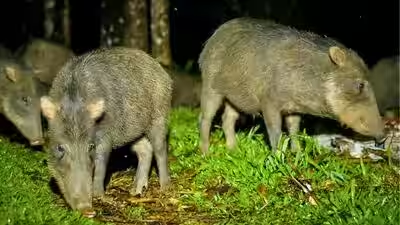
After 18 years without sightings, 13 white-lipped peccaries (Tayassu pecari) have been released into Piedras Blancas National Park in southern Costa Rica as part of a conservation project to restore the species. Its disappearance left a gap in the rainforest’s food chain, disrupting the ecological balance. To address this, Osa Conservation is working with the…

Read More

Pennsylvania awarded $277,200 to permanently protect 27 acres near Pittsburgh; officials estimate the woodland can absorb 22.5 million gallons of rainwater and sequester over 100,000 pounds of carbon a year

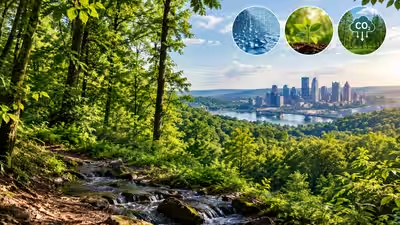
Representative Image (AI-generated) A 27-acre stretch of woodland near Pittsburgh is set to receive permanent protection with the help of $277,200 in state funding. The funding was announced by Pennsylvania State Rep. Emily Kinkead on October 7 and will support the Lowries Run Expansion Project in Ross Township. According to the Pennsylvania House of Representatives,…

Read More

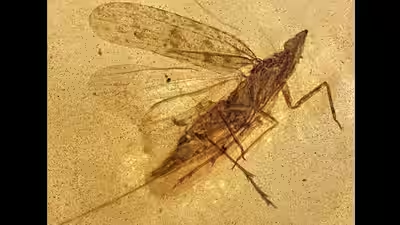
Scientists examined 13 insects trapped in 99-million-year-old amber and identified a new species whose flexible mouthpart reached nearly twice its body length, possibly letting it probe deep into tree bark for sap

Not much in the world has survived to be known as old as the dinosaurs, but when it comes to a recently discovered insect species, the statement holds true. Some 99 million years ago, a tiny insect belonging to a previously unknown species became trapped in tree resin. The resin hardened and turned into amber;…

Read More