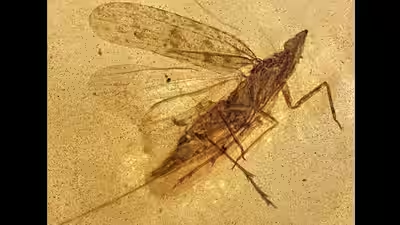
Scientists examined 13 insects trapped in 99-million-year-old amber and identified a new species whose flexible mouthpart reached nearly twice its body length, possibly letting it probe deep into tree bark for sap

Not much in the world has survived to be known as old as the dinosaurs, but when it comes to a recently discovered insect species, the statement holds true. Some 99 million years ago, a tiny insect belonging to a previously unknown species became trapped in tree resin. The resin hardened and turned into amber;…
Read More

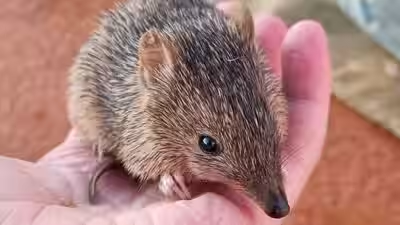
Australia released 80 golden bandicoots into a predator-free sanctuary; 2.5 years later, their population has tripled to about 300 |

Golden Bandicoot. Image Credit: Tim Henderson/AWC Australia’s Golden Bandicoot population has reached about 300 animals at Newhaven Wildlife Sanctuary in Central Australia, around two and a half years after 80 were reintroduced into a fenced predator-free area. The Australian Wildlife Conservancy says the population has tripled since the animals were released in August 2023. The…

Read More

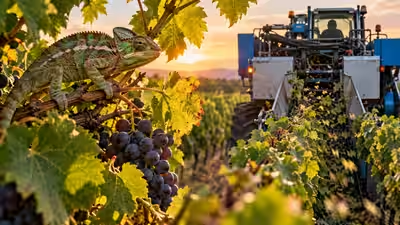
Chameleons may be attracted to vineyards but die during mechanical harvesting; scientists warn farms can become ecological traps |

Farmland is often welcomed as wildlife habitat, but a January 2026 study in Global Ecology and Conservation found reptiles collected during mechanical grape harvesting. Researchers examined a central Israeli winery’s waste container over four nights and found 105 reptiles, most of them dead. According to the study published in ScienceDirect, titled ‘Extensive chameleon mortality in…

Read More

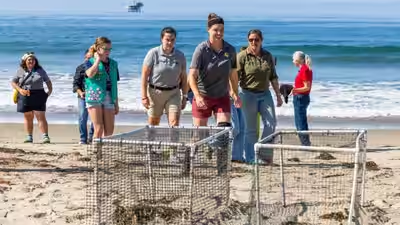
After 40 years without nesting, western snowy plovers have returned to a California beach; a conservation programme has now released 212 birds since 2016 and is using tracking tags to follow their movements

The 11 plovers released this year were fitted with tracking devices that use radio and Bluetooth signals Western snowy plovers have returned to nesting at Coal Oil Point Reserve in Isla Vista, California, after about 40 years without nesting there. The return followed conservation work that included fencing and a docent programme to reduce human…

Read More

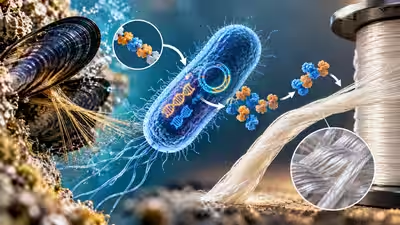
Scientists engineered bacteria to make stronger silk fibres using mussel protein fragments, boosting tensile strength by up to 345% |

Scientists have engineered bacteria to produce a silk-based protein using a surprising ingredient: a protein fragment from mussels. The approach combines an artificially designed silk protein with mussel foot protein 5, or Mfp5, which the researchers found could improve the strength and toughness of the resulting fibres. According to the study published in Nature Communications,…

Read More

A Zambian community is turning human waste from dry toilets into fertiliser as farmers struggle with declining soil fertility |

PC:  Czech-UNDP Partnership for the Sustainable Development Goals In Kashitu, Zambia, a project implemented by Přátelé New Renato and New Renato Community Society, with support from the Czech-UNDP Partnership for the SDGs, is piloting a sanitation system that turns human waste into fertiliser as farmers face rising fertiliser costs and declining agricultural productivity. The project…

Read More

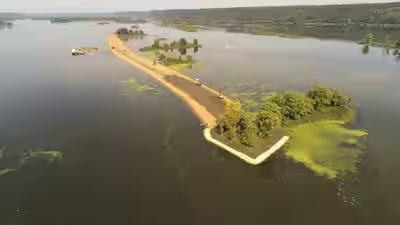
Mississippi River islands near Iowa have been disappearing; a $40 million project is now rebuilding the habitat with dredged material and is designed to protect or restore about 630 acres of river and backwater habitat

Mississippi River islands near Iowa are disappearing; $40M project to restore 630 acres of habitat (Image Credit: U.S. Army Corps of Engineers, St. Paul District) Islands and backwaters along the Mississippi River near Guttenberg, Iowa, have been gradually disappearing as erosion, flooding, wind and waves wear away their shorelines. Now, a major habitat restoration effort…

Read More

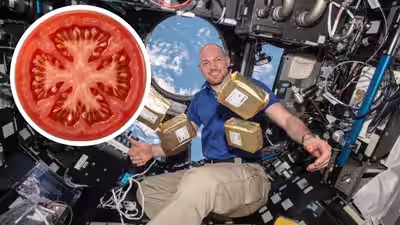
In 1984, NASA sent 12.5 million tomato seeds to space; in 1990 they had to be brought back to Earth and were planted across 40,000 schools in 40 countries

The seeds that NASA sent to space in 1984, returned to Earth six years later in 1990 and had to be distributed among students as plant kits. What lies behind this statement is a tale of space motion that many remain unaware of. The mission was to determine whether exposure to the space environment would…

Read More

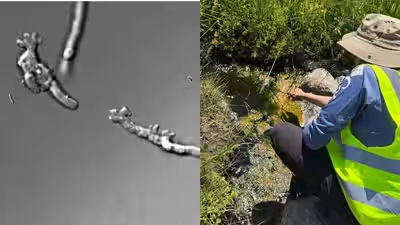
Scientists found a new amoeba in California’s Lassen Volcanic National Park that can reproduce at 145°F, stay active at 147°F and recover after five minutes at 158°F, setting a new heat record for complex life

The discovery also has implications far beyond Lassen Volcanic National Park. Astrobiologists study extremophiles to understand the physical and chemical boundaries within which life can survive In the steaming pools of California’s Lassen Volcanic National Park, life has found a way to thrive where most cells would begin to fall apart. Hidden in geothermal waters,…

Read More

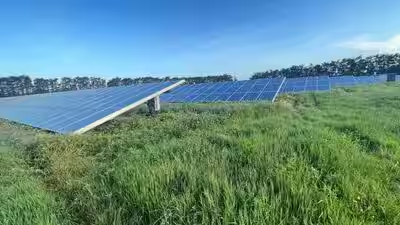
Solar farms with taller grass, wildflowers and hedgerows supported more birds; study recorded 35.1 per 4 hectares |

PC: Dr Joshua Copping/ University of Cambridge Solar farms can provide renewable electricity while also supporting wildlife when managed carefully. A study of six solar farms in the East Anglian Fens found that bird abundance and species richness varied with site management. Researchers surveyed 23.2 km of transects across the solar farms and 15.2 km…

Read More