

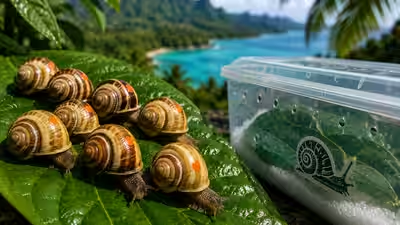
In 1989, Detroit Zoo began helping save snails wiped out in the wild; 37 years later, 500 are travelling 5,000 miles to Tahiti, part of a program that has returned 17,000

Representative Image (AI-generated) A conservation effort that began nearly four decades ago is sending hundreds of tiny snails on a remarkable journey back to their native home. Five hundred Partula snails raised at the Detroit Zoo are travelling more than 5,000 miles from Michigan to Tahiti, where they will be released into the wild as…
Read More

Gold miners have breached a refuge built for rescued orangutans; 14 hectares of Indonesia’s sanctuary damaged in 3 years

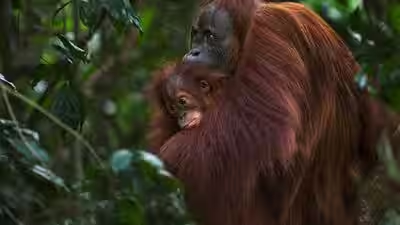
Illegal gold miners have encroached on Indonesia’s Jantho forest reservation, a vital reintroduction site for the critically endangered Sumatran orangutan. The country’s largest environmental pressure group, Indonesian Forum for the Environment, revealed that miners have breached the forest in Aceh province, where the animals rescued from illegal wildlife trade reside, according to a report by…

Read More

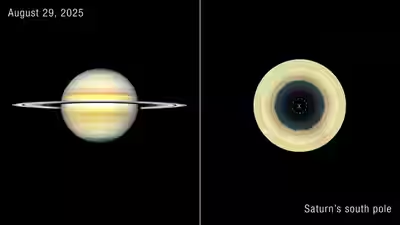
Hubble images revealed a giant 10-sided wave around Saturn’s south pole; one side stretches over 10,000 miles and the pattern has grown clearer since 2023

NASA’s Hubble captures Saturn’s mysterious 10-sided atmospheric wave at its south pole (Image: X/ @NASAHubble) Saturn has revealed another strange feature in its atmosphere, and this time it is hiding around the planet’s south pole. New observations from NASA’s Hubble Space Telescope have captured a giant, evolving 10-sided atmospheric wave encircling the southern pole of…

Read More

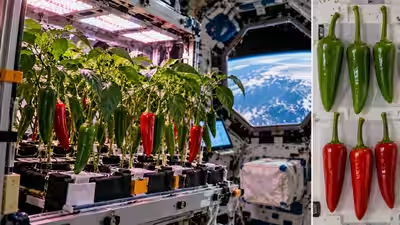
In 2021, Nasa grew Hatch chile peppers in microgravity; after 137 days, the plants produced 26 peppers with unusually straight stems |

In 2021, Nasa grew Hatch chile peppers aboard the International Space Station for the first time, producing edible fruit after 137 days in microgravity. The Plant Habitat-04 experiment was designed to test whether a fruiting crop could survive and produce food in orbit, an important step towards growing fresh produce during future missions to the…

Read More

This 12-year-old’s science-fair experiment turned a Lego robotics kit into a working Braille printer costing far less than commercial machines |

At 12, Shubham Banerjee was looking for a way to make Braille printing more affordable. His search began after he saw a letter asking for help for blind people during his family’s Christmas celebrations at home. When he learnt that Braille printers could cost more than $2,000, he wondered whether the technology could be built…

Read More

Harvard neuroscientists kept human brain organoids alive for over five years, breaking the 694-day record and mimicking brain development |

Harvard neuroscientists have kept tiny clusters of human brain cells alive in laboratory dishes for more than five years, setting a new record that could change how researchers study the human brain. The peppercorn-sized brain organoids, each containing more than one million cells from the cerebral cortex, survived for roughly three times as long as…

Read More

Communities marry glaciers in Gilgit-Baltistan to create artificial glaciers as climate change threatens water supplies |

High in the mountains of Gilgit-Baltistan, communities are reviving an age-old practice to answer a modern water crisis: they are ‘marrying’ glaciers. As natural glaciers shrink and meltwater becomes less reliable, local people are carrying pieces of ice from existing glaciers to carefully chosen sites, where male and female ice are brought together and buried…

Read More

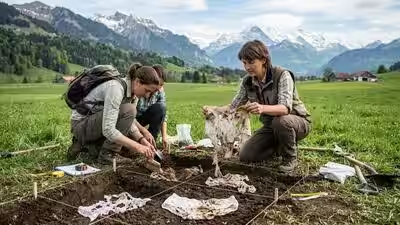
Scientists buried 2,000 pairs of cotton underwear across Switzerland; what they found revealed the health of the soil |

A pair of cotton pants is not usually considered scientific equipment. Yet across Switzerland, thousands of them spent weeks underground as part of an unusual experiment into the condition of the soil beneath people’s feet.More than 1,000 volunteers took part, burying underwear and teabags at sites ranging from private gardens and farmland to grasslands and…

Read More

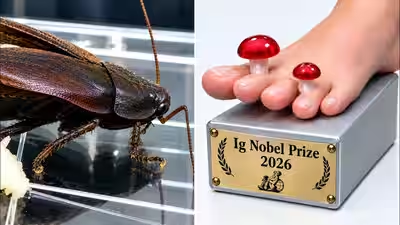
Scientists studied cockroach milk and won an Ig Nobel Prize for it; crystals inside contain a dense store of nutrients |

Image Credit: Left/The Wire/Right/CNN A cockroach producing something resembling milk sounds like an unlikely subject for serious scientific research. Yet one species has developed a remarkably unusual way of nourishing its young. The Pacific beetle cockroach, Diploptera punctata, gives birth to live offspring rather than laying eggs, and its developing young feed on a milk-like…

Read More

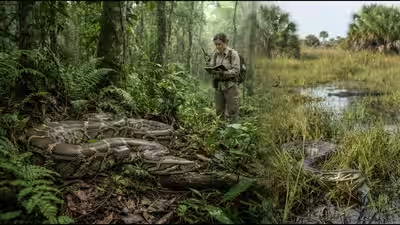
Florida hunts Burmese pythons, but Bangladesh is tracking them to save them; scientists are using radio tags to understand the threatened snake |

The Burmese python has become a symbol of two completely different conservation battles. In Florida, wildlife managers search for and remove the giant snake because its introduced population is threatening native wildlife in the Everglades. Thousands of kilometres away in Bangladesh, researchers are putting radio transmitters on the same species to understand where it moves,…

Read More