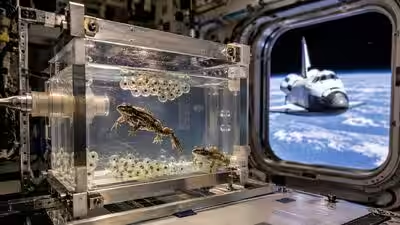

Why EOS-05 matters: Isro breaks Gisat jinx, returns to flight & gets 1st success of 2026

Gisat-1A is the programme’s second attempt, and its success finally gives India the capability that Gisat-1 was meant to establish. BENGALURU: When Isro’s GSLV-F17 lifted off from Sriharikota early Friday and successfully placed Gisat-1A or EOS-05 into its intended orbit, the mission did more than add another Earth observation satellite to India’s growing fleet.It ended…

Read More

In 2016, conservationists put the bends back into a Lake District river straightened 200 years earlier; within months, Atlantic salmon were spawning there for the first time in centuries

Centuries after people forced a Cumbrian river into a straight, artificial channel, nature has reclaimed its original course in the Lake District, bringing endangered wild fish back to historic spawning grounds almost immediately. In the summer of 2016, conservationists restored a 1.1-kilometre stretch of Swindale Beck near Haweswater by putting its natural bends back into…

Read More

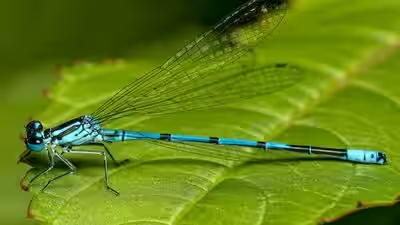
Nearly 70 years after Tucson’s Santa Cruz River ran dry, 2.8 million gallons of reclaimed water began flowing daily; within 4 months, 37 dragonfly and damselfly species were recorded

damselflyRepresenative image from Canva For much of the 20th century, the Santa Cruz River that winds through Tucson, Arizona, existed more as a memory than a living waterway. Groundwater pumping, drought and urban growth drained the riverbed, leaving long stretches of dry sand and scattered pools. Then, in a quiet but transformative experiment, treated wastewater,…

Read More

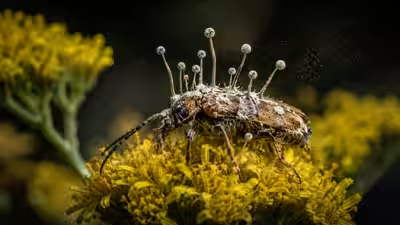
A fungus turns beetles into zombies and makes them die on flowers; scientists say the timing helps infect the next generation |

A fungus infecting goldenrod soldier beetles can alter their behaviour before death and cause changes to their bodies afterwards. Researchers investigating Eryniopsis lampyridarum found infected Chauliognathus pensylvanicus beetles clamped their mandibles tightly onto flower heads shortly before dying. Between 15 and 22 hours after death, the fungus caused the beetles to raise their hardened forewings…

Read More

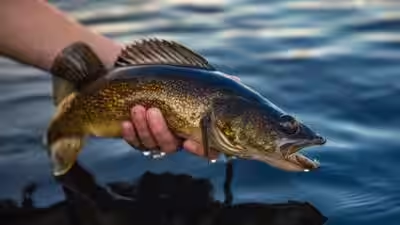
In 2018, scientists began removing about 285,000 fish from Wisconsin’s McDermott Lake; 4 years later yellow perch were up 788%, but walleye recruitment was still zero

Both McDermott Lake and Sandy Beach Lake had previously supported natural walleye recruitment. Scientists removed about 285,000 warm-water fish from a Wisconsin lake over four years in an attempt to help its declining walleye population recover. The large-scale experiment reduced several fish species and was followed by a sharp rise in yellow perch. However, it…

Read More

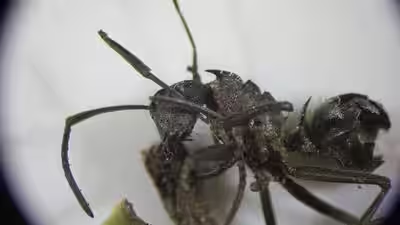
Scientists found a fungus that turns ants into ‘zombies’, forcing them to bite leaves and die so the parasite can spread |

PC: Natural History Museum of Utah A fungus can turn an infected ant into what scientists describe as a real-life ‘zombie ’, taking over its behaviour in a way that helps the parasite reproduce. The phenomenon is linked to Ophiocordyceps unilateralis, a fungus that infects several ant species. After infection, the ant may continue behaving…

Read More

Scientists released up to 45,000 cubic feet of water per second from Glen Canyon Dam for 8 days in 1996; the artificial flood rebuilt Grand Canyon sandbars

Glen Canyon Dam (Image Credit: Canva) For eight days in 1996, the Colorado River through the Grand Canyon experienced something unusual: a deliberately created flood. Scientists working with the U.S. Geological Survey (USGS) and other agencies used Glen Canyon Dam to release water at rates reaching 45,000 cubic feet per second, creating a massive controlled…

Read More

Quote of the day by Stephen Hawking: “I believe the simplest explanation is, there is no God. No one created the universe and…” – a profound reflection on life, death and the universe |

Quote of the day by Stephen Hawking Few questions have occupied the human mind for quite as long as why the universe exists, and whether human life actually has any real purpose. For centuries, people have approached these questions through religion, philosophy and science, often arriving at genuinely very different conclusions. Stephen Hawking, one of…

Read More

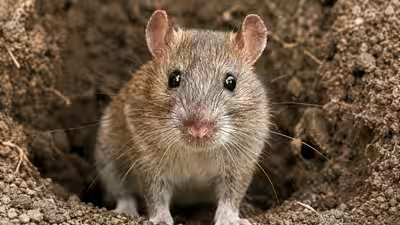
In 2011, up to 30,000 rats were eradicated from Palmyra Atoll; five years later native tree seedlings jumped from fewer than 150 to more than 7,700

In 2011, conservation teams set out on one of the biggest rat eradications ever on a tropical atoll, targeting an estimated 30,000 invasive rodents on Palmyra Atoll in the central Pacific. The goal was not just to remove a pest, but to restore an entire ecosystem that had been suppressed for more than a century….

Read More