
Too early to tell where India fits in

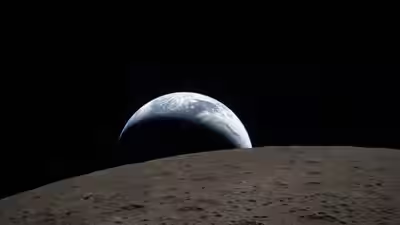
Nasa just invited India to help build a permanent base on the Moon. It’s the kind of headline that writes itself — and yet, what it actually means for India is still almost entirely undecided.Nasa wants to do something considerably more ambitious than return astronauts to the Moon. It wants to start building a place…

Read More

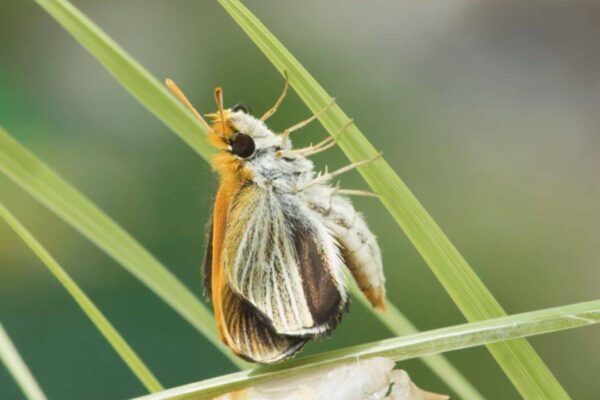
Only nine such butterflies were found in US in 2022; 3 years later, over 1,300 were released

Researchers in Michigan have helped bring the Poweshiek skipperling butterfly back from the brink of extinction after its US wild population fell to just nine in 2022. Through captive breeding, habitat restoration and carefully planned releases, more than 1,300 butterflies were released in 2025. The recovery effort has now expanded to other endangered butterflies, while…

Read More

Crude oil, Strait of Hormuz and Fed cues to drive stock market this week

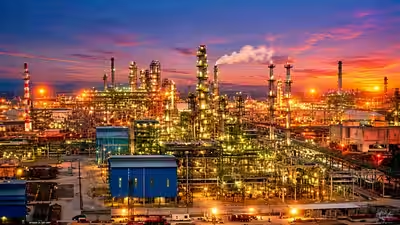
Geopolitical developments, crude oil major driving factors for market movement this week After snapping a two-week winning run, Indian equities are likely to remain sensitive to geopolitical developments, with the Strait of Hormuz, US-Iran standoff and crude oil prices expected to influence trading activity this week.According to analysts, with the quarterly earnings season now behind…

Read More

San Diego’s Leanne Fan, 18, built a device to simulate microgravity and tested red light on injured flatworms; tissue regeneration sped up by 95.2%, helping her win $80,000

Fan built her own $200 device instead of using NASA’s $50,000 clinostat. (Society for science photo) Leanne Fan, an 18-year-old student from San Diego, has been named a finalist in the 2026 Regeneron Science Talent Search for her research into wound healing in space. Her project looks at whether red light therapy can help wounds…

Read More

University of Texas researchers turn everyday biomass into a machine that makes water from air

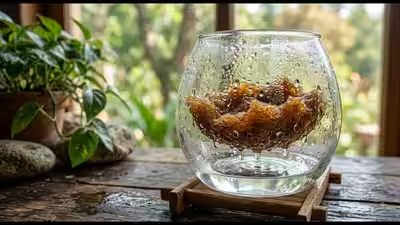
What if food scraps, discarded branches and seashells could help produce drinking water from the air? Researchers at the University of Texas at Austin have developed a new class of biomass-based hydrogels that can capture atmospheric moisture and release it as clean water using relatively mild heat. The approach, described in the peer-reviewed journal Advanced…

Read More

In 1948, scientists left a giant fossil on an Arctic island because they could not carry it; 78 years later it became a record-size new predator

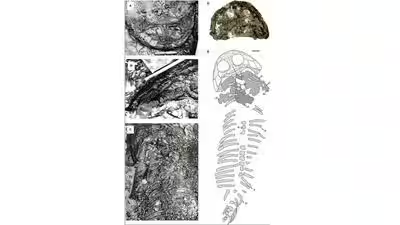
The fossil of Arctobatrachus urdensis as documented in 1948 (A–C), its skull as it appears today (D), and a reconstructed illustration (E). Scale bar: 10 cm. Credit: Schoch et al., 2026. Nearly 80 years ago, a British expedition discovered the battered remains of a giant fossil on the peak of an Arctic island. Unable to…

Read More

Fur traders introduced Arctic foxes across Alaska’s Aleutian Islands to produce pelts; by killing seabirds, the foxes helped turn lush grasslands into tundra

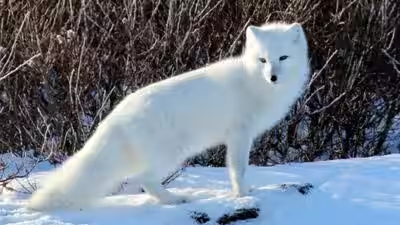
The foxes reduced seabird populations, which meant less nutrient-rich guano reached the islands. Arctic foxes introduced to more than 400 Alaskan islands for fur changed far more than the local wildlife. According to a study published in journal Science, by preying on seabirds, they disrupted the flow of nutrients from the ocean to land and…

Read More