




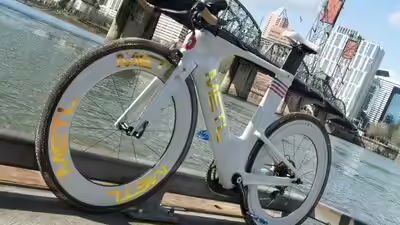
For decades, air-powered tyres have been the standard, but they remain vulnerable to sharp stones, nails and air leaks. However, an amazing solution is proposed by Nasa. Imagine you are cycling through the countryside on a crisp morning when suddenly, the dreaded hiss of a puncture ruins your journey.Glenn Research Center has developed a superelastic tyre technology originally designed for the harsh landscapes of Mars and the Moon. By using a remarkable material known as ‘Nitinol’(a nickel-titanium alloy), engineers have created a wheel that never goes flat because it contains no air at all. This space technology is now shifting from planetary rovers to everyday bicycles, promising a future without the need for a spare tube or pump.
Why did Nasa need to reinvent the tyre from rubber to metal
When the Curiosity rover landed on Mars, it was equipped with state-of-the-art scientific instruments, yet its exploration was disturbed by its ‘wheels.’ After just 16 months into the mission, the rover’s rigid aluminium wheels began to show significant damage from the harsh Martian surface.Nasa realised that for future missions to the Moon or the Red Planet, they needed a wheel that could adapt to rocks and sand rather than breaking under the pressure. This led researchers at the Glenn Research Center to rethink tyre design from the basics, moving away from rigid structures and traditional rubber towards something far more resilient. The goal was to create a ‘Mars-grade’ material that could handle extreme temperatures and harsh environments without losing performance. This necessity became the mother for a breakthrough invention that is now available on the city streets.
What is a Shape Memory Alloy(SMA) and how is it better than rubber
To understand how these tyres work, we have to look at the material inside them called a ‘Shape Memory Alloy’(SMA). Most metals, like the steel in a paperclip, will stay bent if you apply enough force which is called permanent deformation. However, an SMA like ‘Nitinol’ is different at a molecular level. This means that you can bend, twist, or crush it, and it will instantly snap back to its original shape. Nitinol is as elastic as rubber yet as strong as titanium, and it can handle up to thirty times the amount of strain that ordinary metals can manage without suffering any lasting damage.Instead of just stretching, the material actually rearranges its internal structure when it is bent and then flips back after the pressure is released. Because of this, a tyre made from SMA wires can travel across rocky paths effortlessly, acting like a giant shock absorber that never gets a puncture.
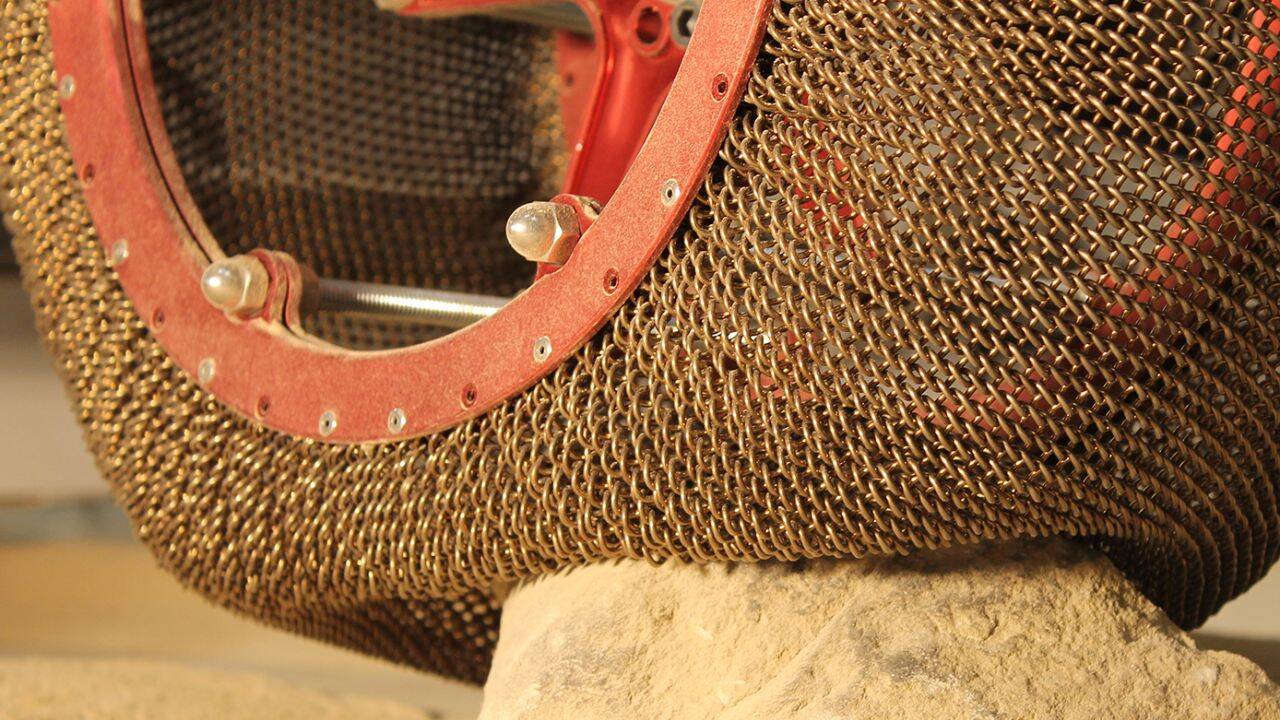
Image Credit: Nasa
How does this airless, puncture-proof technology function
This metal tyre feels as smooth as the one filled with air. The reason is the clever design that uses two layers of SMA elements. The first layer is a single long wire coiled and wrapped around the wheel to give it its circular shape and strength. The second layer consists of smaller springs that are interlocked like a chain mail (interlocking metal rings forming flexible defensive armour in medieval times), providing the necessary strength and flexibility.This pattern allows the tyre to provide a cushion ride similar to the air-powered tyres we use today. Because there is no air pressure to maintain, the tyre’s ‘inflated’ feeling never changes, and you will never find yourself riding on a soft, under-inflated tyre again.
Can these space-tyres really replace rubber
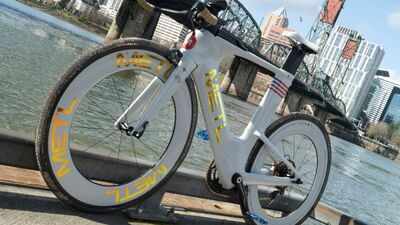
While the core of the tyre is a high-tech metal mesh, the version for cyclists, known as the METL tyre, is covered in a special poly-rubber material. This coating provides the grip and traction you need for different weather conditions, like a smooth road or a muddy mountain trail. One of the most sustainable aspects of this technology is its long life. While the rubber coating might eventually need a re-fitting, the inner Nitinol alloy structure can last for the entire lifespan of the bicycle.This could highly reduce the number of old rubber tyres that end up in landfills every year. Also, these tyres are immune to rust and corrosion, making them low-maintenance for the average person. How relaxing it could be knowing your tyres are virtually indestructible as you pass through glass or debris on your way to work.
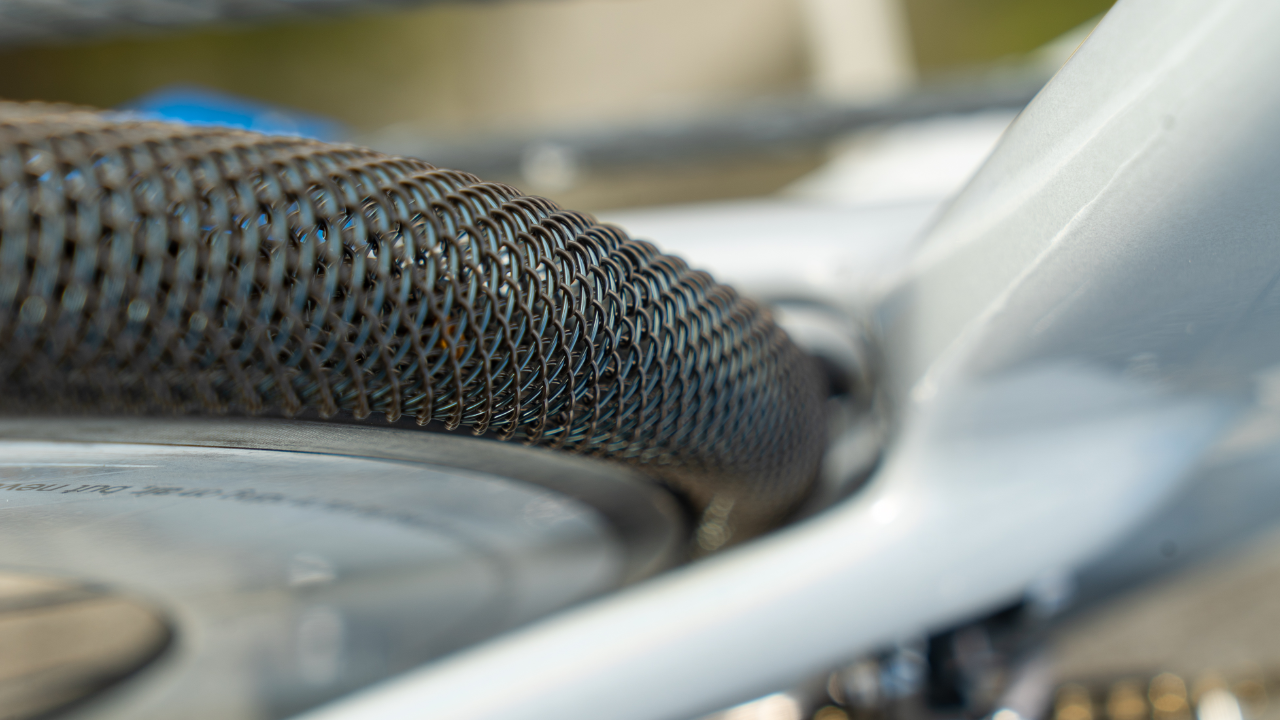
Image Credit: Nasa
Where can we see this technology next
Nasa’s Glenn Research Center has already made these inventions available for licensing to various industries. As the ‘SMART Tire Company’ continues to develop the METL brand, we may soon see a world where the air-filled tyre becomes less relevant. Beyond cycling, the possible applications can range from heavy-duty trucks and military vehicles to commercial aircraft landing gear. SMAs are already being used in more places than you might think, such as the lumbar support systems in modern cars and adaptive wings for high-tech planes.