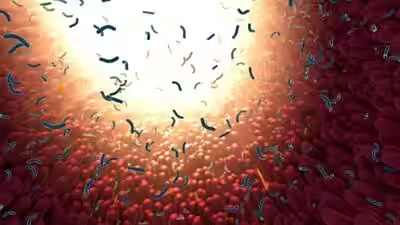
Scientists found hidden populations within common gut bacteria that can spread internationally within decades and are associated with ageing, colorectal cancer, IBD and type 2 diabetes

The study, published in Nature, could also change how scientists identify links between gut bacteria and disease.​ The human gut is home to trillions of microorganisms that together form the gut microbiome. These microbes play important roles in digestion, immune function and metabolism. Now, researchers led by the University of Vienna have found that common…
Read More

Quote of the Day by Albert Einstein: “Try not to become a man of success, but rather try to…” – powerful lesson about success and value |

Quote of the day by Albert Einstein (Image: Wikipedia) Albert Einstein‘s famous words offer a genuinely different way of looking at achievement. In a world where success is often measured through money, job titles and public recognition, this line asks people to look beyond what they have actually achieved and think honestly about what kind…

Read More

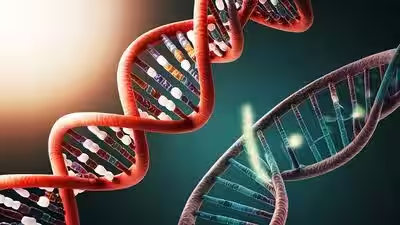
All known life uses 4 DNA letters; UC San Diego showed an existing bacterial enzyme can accurately read and transcribe 8, doubling the genetic alphabet with synthetic letters

Representative image of DNA All life on Earth, from bacteria to blue whales, writes its genetic instructions using the same four-letter alphabet. These four DNA bases, usually referred to as A, T, C and G, pair up in predictable ways to store and pass on the information needed for life. Now, researchers at UC San…

Read More

In 1952, Mary Tsingou programmed a Los Alamos experiment that helped change modern physics; her role was reduced to a footnote and took more than 50 years to receive proper credit

Mathematician and programmer Mary Tsingou Menzel When mathematician and programmer Mary Tsingou Menzel sat down in 1952 at Los Alamos National Laboratory to code a complex physics problem on one of the world’s earliest digital computers, she was breaking new ground. Her work helped make possible a landmark experiment that went on to influence chaos…

Read More

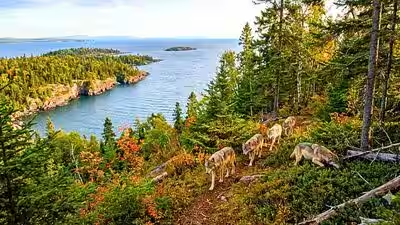
In 2018, scientists moved wolves to an isolated island to rebuild its ecosystem; five years later, researchers found out if it worked |

A new study reveals that wolves brought back to Isle Royale National Park are building a self-sustaining population. Researchers observed the wolves from September 2018 to September 2023 after the National Park Service released 19 animals captured in Minnesota, Michigan and Ontario. The population grew steadily during this period, reaching a minimum of 27 wolves…

Read More

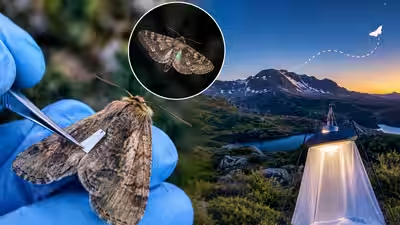
Scientists tagged 14,000 endangered Australian moths with paint and eyelash glue to trace their migration; not one was found, and researchers say that may be good news

Representative Image (AI-generated) More than 14,000 Bogong moths were tagged in an unusual attempt to uncover the secrets of one of Australia’s most remarkable insect migrations. Researchers marked the endangered moths in the Snowy Mountains and hoped to track where they travelled after leaving their summer shelters. Some were marked with non-toxic paint, while others…

Read More

China tested nanobubbles across a 3,300-square-metre section of Taihu Lake; within 20 days a key measure of cyanobacteria fell nearly 90% and ammonia nitrogen dropped sharply

China’s Taihu Lake sees improved water quality over past 10 years A field trial using a two-stage nanobubble treatment system across a 3,300-square-metre section of Taihu Lake in eastern China reduced a key measure of toxic cyanobacteria by nearly 90 per cent within 20 days. Published in the journal Environmental Research and indexed on PubMed,…

Read More

Quote of the day by Alexander von Humboldt: “The most important result of a rational inquiry into nature is… to establish the unity and harmony” |

Alexander von Humboldt spent much of his life travelling through landscapes that most Europeans of his era knew only from maps, then trying to understand what connected the things he encountered. He climbed mountains, measured temperatures and atmospheric pressure, recorded plants and minerals and compared conditions across different elevations. His work eventually led him to…

Read More

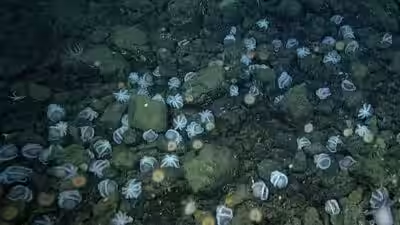
Scientists discovered an underwater city of 20,000 octopus nests deep inside California coast; largest known nursery on the planet

Researchers have located the planet’s largest known octopus nursery deep off the Californian coast, documenting 5,718 animals in 2.5 hectares and estimating about 20,000 around Davidson Seamount. Known as the Octopus Garden, the nursery is located about 10,500 feet below the surface off Central California. According to a statement released by the Monterey Bay Aquarium…

Read More