
nsinhamca6

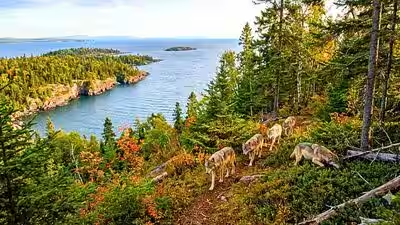
In 2018, scientists moved wolves to an isolated island to rebuild its ecosystem; five years later, researchers found out if it worked |

A new study reveals that wolves brought back to Isle Royale National Park are building a self-sustaining population. Researchers observed the wolves from September 2018 to September 2023 after the National Park Service released 19 animals captured in Minnesota, Michigan and Ontario. The population grew steadily during this period, reaching a minimum of 27 wolves…

Read More

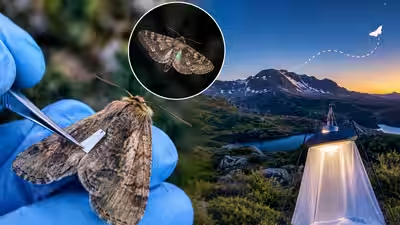
Scientists tagged 14,000 endangered Australian moths with paint and eyelash glue to trace their migration; not one was found, and researchers say that may be good news

Representative Image (AI-generated) More than 14,000 Bogong moths were tagged in an unusual attempt to uncover the secrets of one of Australia’s most remarkable insect migrations. Researchers marked the endangered moths in the Snowy Mountains and hoped to track where they travelled after leaving their summer shelters. Some were marked with non-toxic paint, while others…

Read More

China tested nanobubbles across a 3,300-square-metre section of Taihu Lake; within 20 days a key measure of cyanobacteria fell nearly 90% and ammonia nitrogen dropped sharply

China’s Taihu Lake sees improved water quality over past 10 years A field trial using a two-stage nanobubble treatment system across a 3,300-square-metre section of Taihu Lake in eastern China reduced a key measure of toxic cyanobacteria by nearly 90 per cent within 20 days. Published in the journal Environmental Research and indexed on PubMed,…

Read More

Quote of the day by Alexander von Humboldt: “The most important result of a rational inquiry into nature is… to establish the unity and harmony” |

Alexander von Humboldt spent much of his life travelling through landscapes that most Europeans of his era knew only from maps, then trying to understand what connected the things he encountered. He climbed mountains, measured temperatures and atmospheric pressure, recorded plants and minerals and compared conditions across different elevations. His work eventually led him to…

Read More

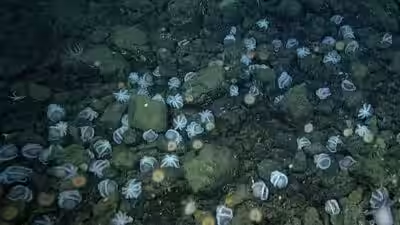
Scientists discovered an underwater city of 20,000 octopus nests deep inside California coast; largest known nursery on the planet

Researchers have located the planet’s largest known octopus nursery deep off the Californian coast, documenting 5,718 animals in 2.5 hectares and estimating about 20,000 around Davidson Seamount. Known as the Octopus Garden, the nursery is located about 10,500 feet below the surface off Central California. According to a statement released by the Monterey Bay Aquarium…

Read More

Scientists reconstructed a Wyoming forest from 56-million-year-old fossil leaves; it lost about 60% of its canopy during ancient warming and took more than 100,000 years to recover

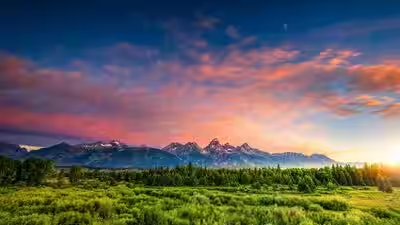
Wyoming tetons Representative image from Canva Deep in the rock record of Wyoming, a layer of fossil leaves tells a quiet but powerful story about what happens to forests when the planet warms rapidly. About 56 million years ago, during a spike in global temperatures known as the Paleocene Eocene Thermal Maximum (PETM), a lush…

Read More

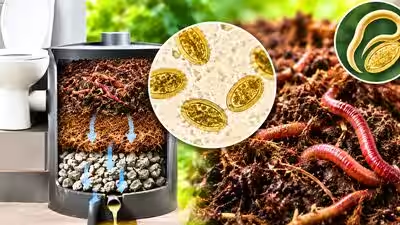
Scientists are using worms that eat human waste to turn toilet waste into compost, but parasitic eggs can survive the process |

Tiger worm toilets are designed to turn human waste into vermicompost using worms that feed on and break down organic material. The approach can reduce the amount of waste that builds up in a toilet and has been studied as a form of non-sewered sanitation. Researchers tested whether tiger worms could destroy Ascaris eggs under…

Read More

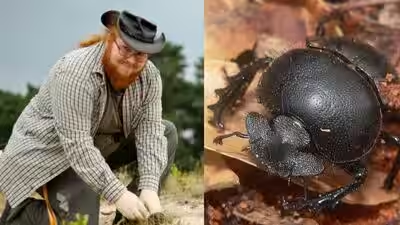
Meet Patrick Urban: The German dung beetle specialist who found a species never known to science among collected beetles |

PC: University of Nebraska–Lincoln From university laboratories in Germany to beetle specimens collected from dung in China, Patrick Urban’s career has focused on insects that are easy to overlook. The German biologist specialises in dung beetle taxonomy and ecology, with particular attention to the Onthophagini group found across the Palearctic and Indomalayan regions. His work…

Read More

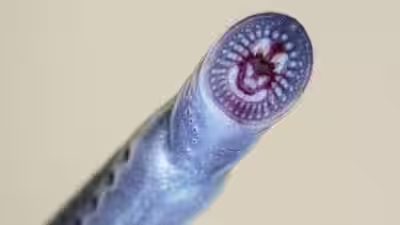
Meet Luke Carpenter-Bundhoo, the Australian ecologist who found an ancient ‘vegan Dracula’ fish 900 miles beyond its known range |

Australian brook lamprey. Image Credit: David Moffatt In 2022, Australian ecologist Dr Luke Carpenter-Bundhoo set out to study how the Black Summer bushfires had affected ecosystems in K’gari, Queensland. Instead, while surveying a creek, he encountered an unexpected creature: an eel-like fish with seven gills and a mouth lined with circular rows of teeth. The…

Read More