





nsinhamca6

In 1885, New Zealand released European hedgehogs as garden pest killers; 140 years later, DOC calls them a major threat to native wildlife and one can empty an endangered tern colony of nesting birds

European hedgehog (Image Credit: Canva) What was once seen as a useful garden helper in New Zealand has become an unexpected threat to some of the country’s most vulnerable wildlife. European hedgehogs were deliberately introduced to New Zealand in the 19th century, with acclimatisation societies releasing them in the hope that they would help control…

Read More

US stock market today: Wall Street pulls back from record highs as AI-related stocks drop

Technology  shares have swung sharply this summer as investors question whether valuations have risen too far. US stock market today: Wall Street benchmarks moved further away from their record high on Tuesday as technology shares related to the artificial-intelligence boom came under renewed selling pressure.The S&P 500 declined 0.5%, putting it on course for a…

Read More

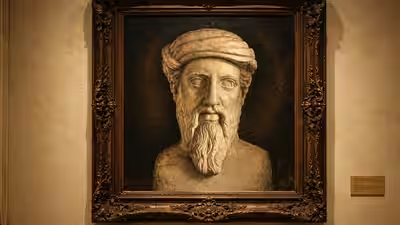
Quote of the day by Pythagoras: “Of all the rest of mankind, make him your friend who distinguishes himself by his virtue” |

Pythagoras is best known today for the mathematical theorem that bears his name, but the ancient Greek thinker was also associated with a broader philosophical tradition that explored morality, discipline, friendship and the pursuit of a virtuous life. One saying attributed to him offers a timeless reflection on the people we choose to keep close:…

Read More

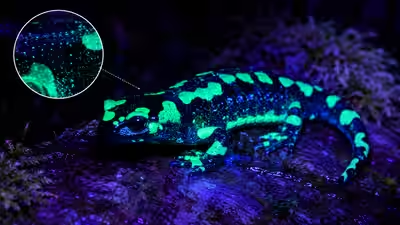
Scientists found fire salamanders glow blue-green under ultraviolet light, with their skin glands producing fluorescent secretions |

At first glance, the fire salamander appears much as it always has: black skin broken by irregular yellow markings, a pattern long associated with the species’ chemical defences. But under ultraviolet light, that familiar appearance changes. According to the 2026 study published in the Royal Society, titled ‘Glandular biofluorescence in fire salamanders (Salamandra salamandra): first…

Read More

Henrietta Lacks died at 31 in 1951, but her cells kept multiplying; the discovery that transformed medicine and helped save millions of lives

Henrietta Lacks (Image Credit: Wikipedia) In 1951, Henrietta Lacks, a 31-year-old African-American woman, was diagnosed with cervical cancer at Johns Hopkins Hospital in Baltimore. During her treatment, doctors removed tissue from her tumour for research without telling her or obtaining her permission. The cells behaved unlike any human cells scientists had successfully maintained before: they…

Read More