

nsinhamca6

Melinda French Gates puts $1 billion behind women’s power; her investments back overlooked women tackling climate change |

Melinda French Gates is committing $1 billion through 2026 to advance women’s power and influence, while her investment platform is backing women-led funds working on climate solutions. Through Pivotal Ventures, Gates has invested in Planeteer Capital, a climate-tech fund led by Sophie Purdom that backs early-stage companies developing solutions to climate change. The investment comes…
Read More

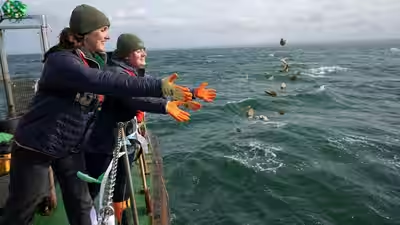
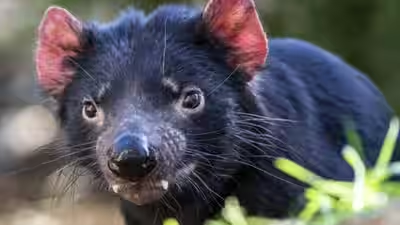
In 2012, Tasmania moved 15 devils to Maria Island to protect the species from facial-tumour disease; after 28 were released by 2013, a 3,000-pair penguin colony disappeared

The facial tumour had severely affected devil populations in many parts of Tasmania In 2012, 28 Tasmanian devils were brought to Maria Island off Tasmania’s east coast as an “insurance population” when facial tumour disease was severely affecting the species. The devils have since thrived, with their numbers reaching up to 90. But their success…

Read More

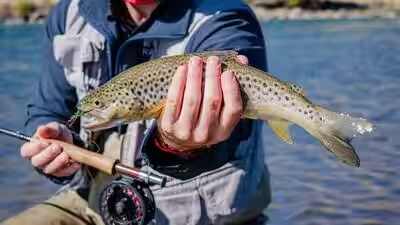
From 1870 to 1988, California stocked mountain lakes with trout for anglers; the fish helped push yellow-legged frogs from 92% of their historic Sierra Nevada range

For more than a century, California’s high mountain lakes were stocked with trout to make remote wilderness more attractive to anglers. Between 1870 and 1988, fish were carried or flown into lakes and streams that had historically been fishless, creating new opportunities for recreation but also changing the balance of life in the Sierra Nevada….

Read More

Scientists drilled nearly 1 kilometre into an Antarctic glacier and found meltwater can make the ice suddenly move 20% faster |

Glacier in Antarctica. Image Credit: Jason Auch/Wikipedia Scientists have directly linked surface meltwater to a sudden increase in the speed of an Antarctic glacier, after drilling deep into Langhovde Glacier in East Antarctica. The study titled ‘Acceleration of an Antarctic outlet glacier driven by surface meltwater input to the base,’ found that water from melting…

Read More

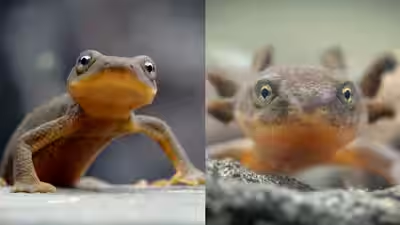
More than 100 years ago, crayfish were introduced into Oregon’s Crater Lake; today they occupy 95% of the shoreline and its unique newt is disappearing |

The Mazama newt is a salamander found only in Crater Lake (Image: Oregon Zoo) More than a century ago, people introduced signal crayfish into Oregon’s Crater Lake as food for nonnative trout and salmon. The decision was made in 1915, decades before scientists understood how dramatically the crustaceans could reshape the lake’s ecosystem. Today, the…

Read More

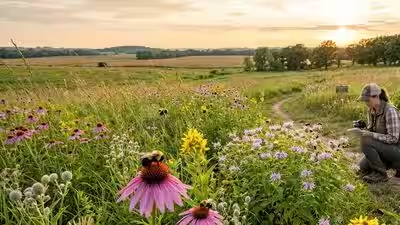
Wisconsin restored former farmland into prairie; researchers found more bumblebees and rare species only at the restored sites |

Fields once used for crops can become important wildlife habitat when restored to native prairie. Across Wisconsin, former farmland is being transformed with native grasses and wildflowers, creating a wider range of resources for pollinators. According to Restoring Lands, A Wisconsin Land Trust, bumblebee surveys have found greater diversity at restored sites, with some uncommon…

Read More

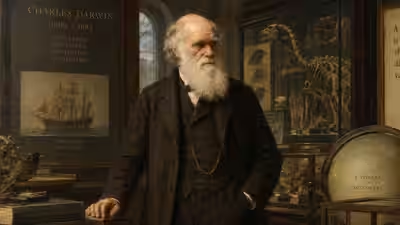
Charles Darwin: Quote of the day by Charles Darwin: “A man who dares to waste one hour of time has not discovered the value of life” |

Charles Darwin, the English naturalist whose theory of evolution by natural selection transformed our understanding of life, also left behind observations that extended beyond biology. One of his most memorable reflections was on the value of time and how people choose to use it. His words, “A man who dares to waste one hour of…

Read More

In 1947, fruit flies were sent into space using captured German rocket. Decades later, NASA studied how space affects immunity |

A tiny insect became one of the earliest living passengers sent towards space, long before astronauts were routinely orbiting Earth. In 1947, fruit flies were loaded onto a captured German V-2 rocket in New Mexico as scientists began testing what happened to life above the atmosphere. The experiment was primitive by modern standards, but it…

Read More

A Scottish river project set out to revive oysters that once covered an area the size of Edinburgh; now, 60,000 have been returned |

A Scottish restoration project has returned 60,000 native oysters to the Firth of Forth, reviving a species that once formed vast oyster beds across an area roughly comparable to the size of Edinburgh. The Restoration Forth partnership originally aimed to return 30,000 European flat oysters to the estuary, but the target was later doubled after…

Read More