





nsinhamca6

Meet Aniket Sarkar: The 13-year-old 3M Young Scientist who built a low-cost system to capture water from dry air for farmers |

PC: 3M Young Scientist Lab Dry air is not completely without water. There is moisture suspended in the atmosphere even when rainfall is scarce, and 13-year-old Aniket Sarkar wanted to find out whether some of it could be recovered for agriculture. His idea led to a low-cost atmospheric water capture system built with ordinary materials,…


Read More

Scientists found the world’s fastest star moving at 15,500 miles per second, over 8% the speed of light, and it could test Einstein’s theory |

Astronomers have found what is currently the fastest known star in the Milky Way, a faint star racing through the extreme environment around Sagittarius A*, the supermassive black hole at the centre of our galaxy. Called S301, the star reaches a staggering speed of about 15,500 miles per second, or 25,000 kilometres per second, which…

Read More

Us Sanctions On Iran: ‘One-two punch’: US vows toughest-ever Iran sanctions, presses China to help reopen Hormuz

File photo: US treasury secretary Scott Bessent speaks to members of the media in Washington (Picture credit: AP) The United States is preparing what treasury secretary Scott Bessent described as the “toughest sanctions in history” against Iran, as Washington seeks to intensify economic pressure on Tehran and force the country towards a settlement.Bessent said the…

Read More

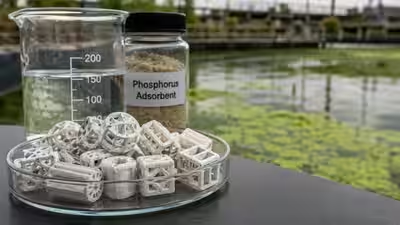
Florida Atlantic University received $600,379 grant to develop 3D-printed adsorbents that remove phosphorus and combat harmful algal blooms |

Harmful algal blooms can turn freshwater ecosystems into dangerous environments, but researchers at Florida Atlantic University are developing a novel way to tackle one of the nutrients that helps drive them, excess phosphorus. Rather than removing algae after a bloom has already formed, the team is developing 3D-printed adsorbent structures designed to capture phosphate directly…

Read More

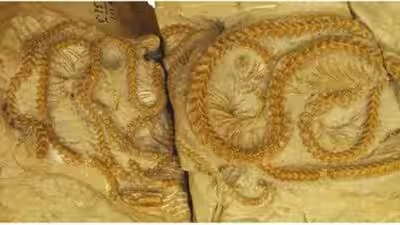
Scientists discovered four snakes curled together in a burrow for 38 million years as the volcanic ash preserved their remarkable fossils |

Overview of Hibernophis breithaupti (UW11120 on two blocks), showing holotype (UW-11120-A) and paratype (UW-11120-B) specimens as exposed on the surface. Image Credit: Zoological Journal of the Linnean Society A snake fossil discovery in Wyoming has given palaeontologists an unusually close look at the lives of these ancient reptiles. Four complete skeletons belonging to a newly…

Read More