




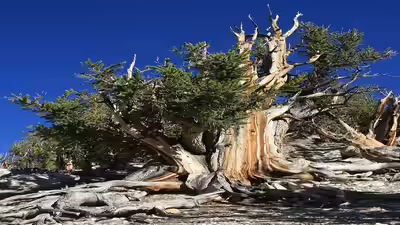
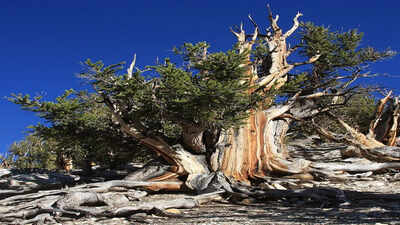
To be able to withstand the rigours of altitude and aridity in the mountains of the Great Basin, one has to accept the fact that a little suffering will come. In these mountains, where the weather never stops, and the surface is made up of hard rock, lives an inhabitant who seems to make a sport out of surviving. The Great Basin Bristlecone Pine is more than a tree; it is an archive. These trees existed even before Rome became an empire, and continue to thrive in their mountainous habitat.This is the story of extreme patience. Most forests operate under the principle of survival of the fastest. Trees compete for light, grow rapidly, and evolve quickly. Not the bristlecone pine, which follows a different pattern. Instead of rushing to the canopy, it finds a niche in one of the most inhospitable regions. It selects the harshest climates on the continent to ensure that it will not suffer from fires or competition with other fast-growing organisms. Such an approach allows bristlecone pines to preserve their longevity.The biological key to immortalityThe most fascinating part about these ancient plants is that they do not seem to age in any way. In the natural course of life, all organisms gradually become less vital and eventually die. But the research paper titled Does bristlecone pine senesce? provides evidence that the cells of these plants are immune to deterioration. The researchers found that there were no signs of ageing in the meristem tissues.The absence of any signs of reduced vigour implies that the bristlecone pine remains just as vigorous when it reaches 4,000 years of age as when it is 400 years of age. Whether it be from a storm knocking off a branch, or a century of weathered ice stripping away its bark, whatever portion survives remains young and vigorous. The ability to maintain young living tissues for thousands of years enables it to survive through periods of climatic fluctuations that would kill most other organisms.The key to the longevity of bristlecones is in the wood. Bristlecones are very slow growers, and thus the density of the wood is very high and full of resins. This makes the wood heavy and serves as a natural protection from the common causes of ageing trees, such as rotting, fungi, and boring insects. Even after death, the structure remains intact for thousands of years. The strip-bark design, which only keeps a narrow layer of living tissues to connect the root system to some branches, helps the tree conserve energy while still staying alive.Mastering resource conservation
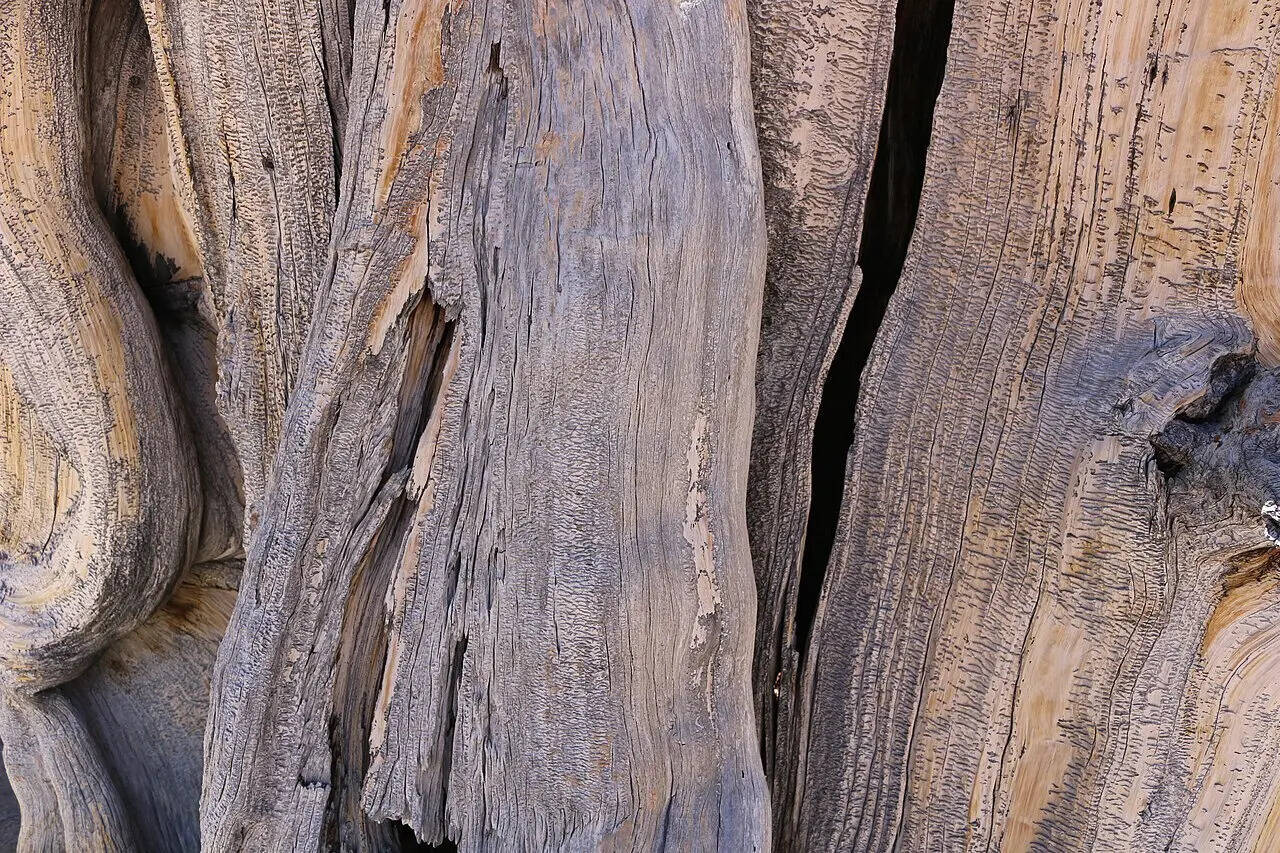
Their rings offer invaluable insights into Earth’s climate history, teaching a profound lesson in the power of patience over speed. Image Credits: Wikimedia Commons
However, the frugality of the bristlecone does not end with the wood. It applies everywhere in the tree, including the needles. Unlike other conifers that drop needles regularly, the bristlecone pine has found an efficient way of needle conservation, as explained in the journal Oecologia.With the ability to keep their needles for a long time, trees save a lot of energy that could otherwise be used up creating new leaves every year. In a poor nutritional environment, where each ounce of energy counts, this trait becomes something like a superpower for the organism. This is because the tree can continue photosynthesising at a constant but slow pace even if there’s no favourable weather.Scholars are currently delving into the DNA structure of these trees to discover what enables them to achieve such astonishing feats. The first genome report on Pinus Longaeva that came out in 2026 seeks to unravel the genetics behind their longevity and success. The early findings indicate the existence of specific genes related to disease and stress resistance working alongside their slower growth rates. It is not simply one factor that allows them to survive for so long – every facet of their physiology works together to contribute to longevity.Importance of these ancient treesFor those lucky enough to visit the White Mountains or Great Basin National Parks and see these trees in person, they serve a unique purpose as a reminder. According to the National Park Service, individuals with names like Methuselah have been dated at about 4,800 years old. In other words, before humans even started constructing the pyramids in Egypt, these trees were merely seedlings.Moreover, trees are vital for the study of history itself. Their rings are highly sensitive to any changes, allowing us to view the climate history of the past eight thousand nine hundred years year by year. Trees show whether the Earth was warm or dry during certain times and how life on Earth evolved. From this perspective, the bristlecone pine is not just a tree but rather an instrument for understanding history.The bristlecone pine provides an important lesson in life: It is not all about speed. In a world where quick action and bold statements earn respect, these gnarled trees that have been around for hundreds of years remind us that real strength can be found in patience.