



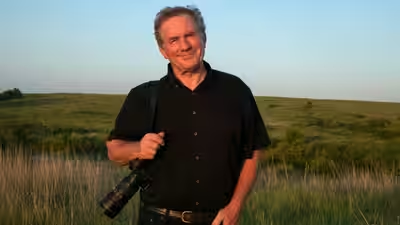
In a world where species can disappear before most people even know they exist, photographer Joel Sartore has spent two decades making sure wildlife is seen. According to a National Geographic report, Joel Sartore has worked toward protecting wildlife for two decades. The Photo Ark project, which started as a personal project in 2006 has grown into a global conservation effort to document thousands of animal species and generate worldwide awareness about those in danger of extinction. According to the report, National Geographic Explorer Sartore started the project with a simple but powerful idea: to photograph animals one species at a time, creating a visual record before they are gone. Twenty years later, the project has blossomed into a worldwide conservation movement, amassing more than 18,000 animal images.
It began with a naked mole rat
According to the National Geographic report, the first subject of the Photo Ark was not the type of animal you’d think to find in wildlife photography. In 2006, Sartore photographed a naked mole rat in the kitchen of Lincoln Children’s Zoo in Nebraska. A big part of Sartore’s philosophy is that every animal matters. The project is not simply about famous species such as tigers, polar bears or elephants. Many of its subjects are obscure, diminutive animals that seldom command public attention, but are no less vital to ecosystems on Earth.
A project born of a family crisis
The Photo Ark started at a low point in Sartore’s life. In 2006 his wife Kathy was diagnosed with breast cancer and spent months undergoing treatment while the couple cared for their three young children. At the time, Sartore was reminded of the work of naturalist John James Audubon, whose paintings documented birds that later vanished. He started to imagine a modern-day version of that record: a portrait of each animal, saved for future generations. In a tough time, Sartore had started it as a way to stay busy, and eventually, it became Sartore’s life’s work.
Racing extinction
The report highlighta that there’s a race against time behind the striking studio portraits. Animals photographed for the Photo Ark have vanished or have come perilously close to extinction. One of the most poignant examples was Toughie, a Panamanian tree frog who became the last known member of its species. Chytrid fungus, a disease that has caused catastrophic amphibian declines, had devastated the Rabbs’ fringe-limbed tree frog. Toughie’s picture became the face of what extinction looks like. His species is gone, but his picture remains as a permanent record. The story illustrates the greater mission of the Photo Ark: to make endangered animals visible before they become memories.
Photos from conservation action
According to Sartore, this project is more than just a great collection of wildlife portraits. He hopes the photos will generate public interest, funding and political support for conservation. One example was the Florida grasshopper sparrow, which had dwindled to dangerously low numbers. Sartore’s got the shots of the bird after conservationists had trouble drawing enough attention and money to its plight. The publicity that followed helped raise awareness and funding for the species protection efforts, which include captive breeding and genetic conservation. Sartore believes that these are the kinds of results that show the power of photography to take an animal out of obscurity and put it into the public conversation.
A global crew behind the lens
The report also states that the Photo Ark’s success relies on a huge network of conservationists, zoos, researchers, photographers and animal experts, although Sartore is the face of the project. He’s got a family into it big time too. His son Cole brings technical and photographic skills, while his wife helps to handle the project’s immense logistical needs. Wildlife experts and taxonomists are also part of the team, and they help to identify species and monitor their conservation status.That network allows Sartore to work at a breakneck pace. The team visited more than 100 places on a 2026 expedition across Australia, and eventually photographed animals at dozens.
All about the 18,000th species
One of the project’s recent milestones was the 18,000th species, the critically endangered red handfish. This small marine species has a limited population and is threatened by habitat destruction. Its odd look and odd way of moving along the ocean bottom made it a great Photo Ark subject. The milestone also reflects Sartore’s philosophy: The animal that most needs to be photographed is often the most important to photograph.
From extinction to re-discovery
But not every Photo Ark story is a loss. Some photographs are of species that have been rediscovered or are on their way to recovery. The Lord Howe Island stick insect was rediscovered in 2001, after having been thought extinct. Also in the growing number of animals hanging on against the odds in the Photo Ark is the Florida bonneted bat, one of the rarest species. These stories are an antithesis to extinction and show that conservation can sometimes offer a second chance for species.
The on-going long road
The report concludes that Sartore has documented more than 18,000 species, but he believes the Photo Ark has decades of work ahead. Some of the world’s rarest animals remain hard to reach, like the Javan rhinoceros and Tonkin snub-nosed monkey. In the end the project is about patience. Some animals may take years of negotiations and conservation work before Sartore can shoot their picture. For now, the Photo Ark’s mammoth task continues to document the world’s animals, one by one, and use those images to show people the reality of extinction.Image Courtesy: Instagram/joelsartore