


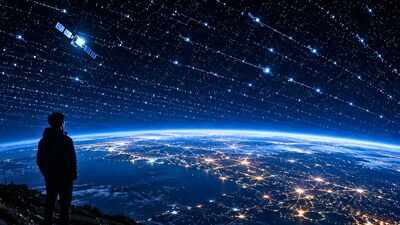
The night sky has inspired people for thousands of years, but scientists now say it could look very different in the future. The researchers at the European Southern Observatory (ESO) warn that ambitious plans to launch huge numbers of satellites into Earth’s orbit could make the night sky much brighter than it is today.While many of these satellites are designed to provide useful services, astronomers say their combined effect could make it far more difficult to study the universe from the ground. The researchers believe there is still time to reduce these impacts, but they say decisions made now will shape the future of astronomy for decades to come.
How millions of proposed satellites could permanently brighten Earth’s night sky
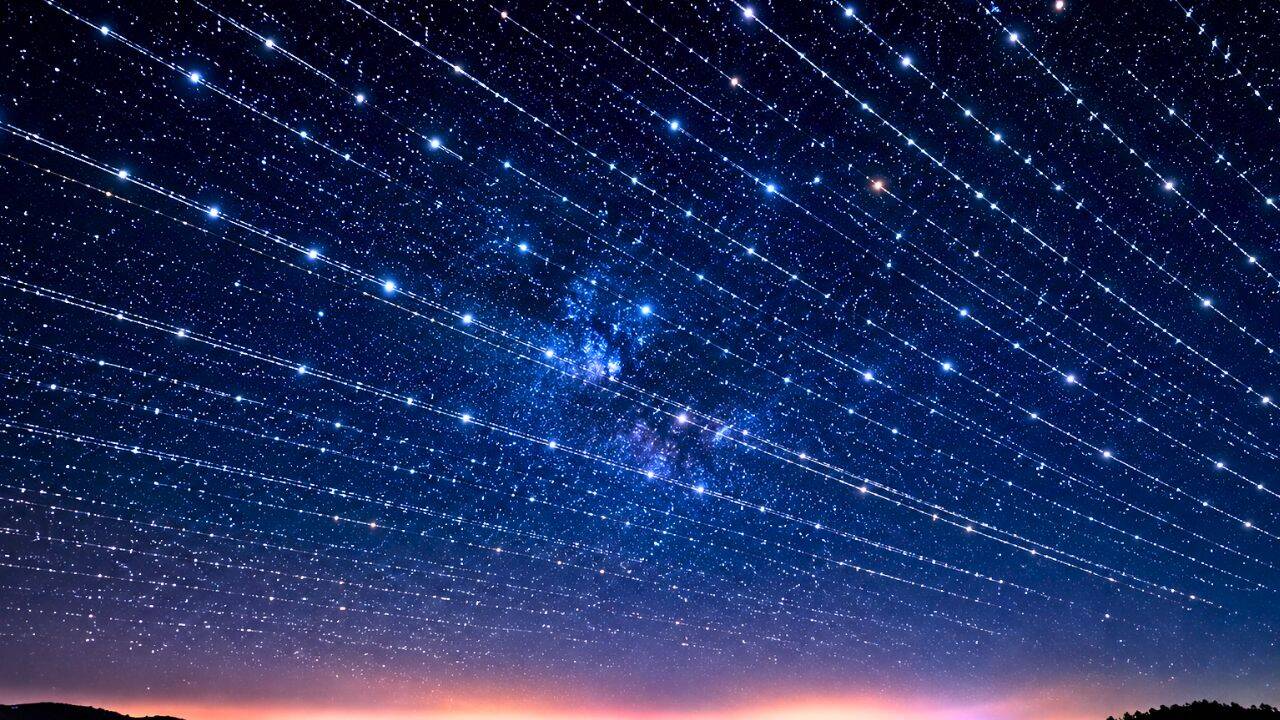
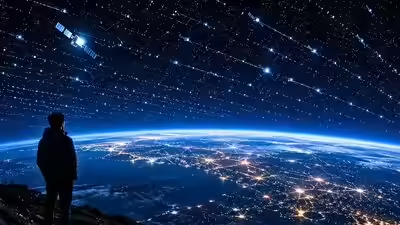
PC: AI Generated
Thousands of satellites already orbit Earth, and many more are planned. According to the ESO, some of the proposals being discussed are much larger than anything launched before.One proposal involves placing over one million satellites into orbit to support data centres in space. Another suggests launching about 50,000 satellites fitted with large mirrors that would reflect sunlight at night.If projects like these move forward, the number of satellites in orbit could increase dramatically, raising concerns about how they would affect observations of the night sky.Olivier Hainaut, an astronomer at ESO, said satellites already interfere with astronomical observations because they are much brighter than the distant objects scientists are trying to study. “Satellites, illuminated by the Sun, are much brighter than distant galaxies. When a satellite crosses what we observe, it makes a bright streak on our image, zapping whatever is behind it,” Hainaut said.
What prompted ESO astronomers to warn about millions of satellites
The researchers explain that the problem is not limited to the bright streaks satellites leave as they pass through a telescope’s field of view. If enough satellites are placed in orbit, they could collectively increase the natural brightness of the night sky, even when individual satellites are too faint to be seen.This effect, known as diffuse sky brightness, happens because sunlight reflected by large numbers of satellites spreads across the sky. Instead of a completely dark background, astronomers would have to observe faint objects against a brighter backdrop. The impact could become even greater if satellites fitted with mirrors are launched. Since these mirrors are designed to reflect sunlight towards Earth, they would contribute much more light than conventional satellites.
Why darker skies matter for astronomy
Ground-based observatories rely on naturally dark skies to study the universe. Many of the objects astronomers investigate are incredibly faint because they are extremely distant. Some galaxies are billions of light-years away, meaning the light reaching Earth has travelled across space for billions of years.Even a small increase in the brightness of the night sky can make these faint signals more difficult to detect.According to the researchers, future satellite constellations could affect both existing observatories and the next generation of powerful telescopes that are currently being built.Although astronomers have developed ways to reduce the effects of today’s satellites, they say much larger constellations would create challenges that are far more difficult to overcome. As Hainaut explained: “Until now we have managed, but it’s getting worse.”
Researchers suggest there is a practical limit
ESO does not argue against using satellites or developing new space technologies. Instead, the researchers say there should be a balance between the benefits satellites provide and the impact they have on scientific research.Based on their analysis, they estimate that astronomy can continue to operate successfully if the number of relatively faint satellites remains below about 100,000. However, proposals involving hundreds of thousands or even millions of satellites would go well beyond that level and could significantly affect astronomical observations. The researchers say understanding these effects now is important because many of the largest satellite constellations have not yet been launched.
The night sky is a shared natural resource
It also points out that the issue extends beyond professional astronomy. For generations, people around the world have enjoyed looking up at a sky filled with stars. A brighter night sky caused by large numbers of satellites could change that experience for everyone, not just scientists.At the same time, the researchers noted that satellites provide important services. This could include reducing satellite brightness, carefully planning arrangements, and considering the long-term effects before approving very large constellations.