





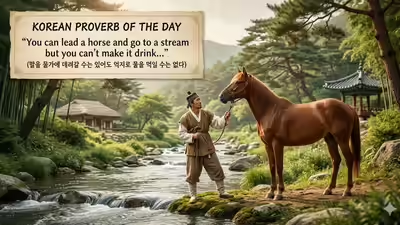
Every culture has sayings about advice, effort, and human nature. They may use different images, different animals, and different settings, but many arrive at a similar observation: there are limits to what one person can make another person do.This Korean proverb expresses that idea through a simple scene.“You can lead a horse and go to a stream but you can’t make it drink water through its own will.”Even without knowing anything about its history, the meaning feels familiar. The horse reaches the water. The opportunity is there. Nothing stands in the way. Yet the final decision still belongs to the horse.That small detail is what gives the proverb its lasting power.People can offer guidance. They can create opportunities. They can provide support, encouragement, resources, and advice. After a certain point, though, the choice belongs to someone else.Many frustrations in life seem to grow from forgetting that distinction.
Korean proverb of the day
“You can lead a horse and go to a stream but you can’t make it drink water through its own will.”
Parents learn this lesson sooner or later
Few experiences illustrate the proverb more clearly than parenting.Mothers and fathers spend years trying to guide their children. They teach habits, share advice, point out mistakes, and hope certain lessons will stick. Sometimes they do. Sometimes they do not.A parent may encourage a child to study harder, save money, choose better friends, or avoid a mistake that seems obvious from experience. Yet children, like adults, often prefer learning certain lessons for themselves.That reality can be difficult to accept.Many parents eventually realise they cannot live another person’s life on their behalf. They can open doors. They can offer direction. They can explain consequences. They cannot make decisions for someone indefinitely.The proverb captures that truth without sounding harsh about it.
Advice becomes useful only when someone is ready to hear it
Almost everyone has experienced a moment when advice made perfect sense years after it was first given.At the time, it may have been ignored.Perhaps the person was too young. Perhaps they were too confident. Perhaps they simply were not ready.Then something happens.A setback. A disappointment. A challenge that changes perspective.Suddenly the old advice returns and sounds completely different.The words did not change. The listener did. That seems to be one of the ideas sitting quietly beneath the proverb. Knowledge can be offered, but acceptance cannot be forced. Understanding often arrives on its own schedule.People frequently learn this when trying to help friends or relatives through difficult situations. The right advice may be available from the beginning. Whether someone chooses to act on it is another matter entirely.
Workplaces are full of examples
The proverb applies just as easily outside family life.Managers often encounter employees with potential they cannot unlock on their own. Teachers see students who possess talent but lack motivation. Coaches work with athletes who have every physical advantage yet struggle with commitment.In each case, guidance can only go so far.A teacher can explain. A manager can mentor. A coach can train. The individual still has to decide what to do with the opportunity.This is why some people exceed expectations while others fail despite having access to the same resources. Circumstances matter, but personal willingness matters too.The proverb does not dismiss the value of support. Quite the opposite. The horse still needs someone to lead it to the stream. The saying simply recognises that support alone is not enough.
Human beings often resist being pushed
There is another reason the proverb continues to feel relevant. People generally prefer making choices they believe are their own.Pressure can sometimes produce the opposite result from what was intended. The harder someone is pushed, the more determined they become to resist. This tendency appears in children, adults, workplaces, and even entire societies.Psychologists have studied versions of this behaviour for years. Individuals often react negatively when they feel their freedom to choose is being threatened.The proverb reaches a similar conclusion through a much simpler image.The horse is at the water. The water is available. Nothing practical prevents drinking. Yet willingness cannot be supplied by somebody else. That final step remains personal.
Why the saying has survived for generations
Many old proverbs disappear because they become tied to circumstances that no longer exist. This one has remained relevant because the situation it describes appears again and again in everyday life.People continue trying to help family members who refuse assistance. Teachers continue encouraging students who are not ready to engage. Friends continue offering advice that goes ignored. Leaders continue attempting to motivate those who lack interest in following.The details change. The pattern remains. That familiarity is probably the reason the proverb has travelled across generations. It describes a reality that most people eventually encounter, regardless of where they live or what they do.
What the proverb teaches about personal choice
“You can lead a horse and go to a stream but you can’t make it drink water through its own will” is a reminder that influence has limits. Guidance, support, and opportunity all matter, but they cannot replace personal choice.The proverb does not suggest people should stop helping others. Rather, it highlights an important truth about human behaviour. Every individual must eventually decide for themselves whether to act, learn, change, or move forward.That lesson can be frustrating at times. It can also be freeing. Recognising the difference between what can be offered and what must be chosen helps explain why this simple image of a horse at a stream continues to resonate long after it was first spoken.